

Olde Town Lady: A Historic Collection of Modern Day Portraits.
OLDE TOWNE LADY is a series that brings the stories of different generations of Bahamian women out of the shadows and analyzes how they collectively contributed to the culture and traditions that are common and upheld in our Bahamian society today. We aim to theorize and construct the historical knowledge of Bahamian Women through Oral Histories and Creative Interpretations.
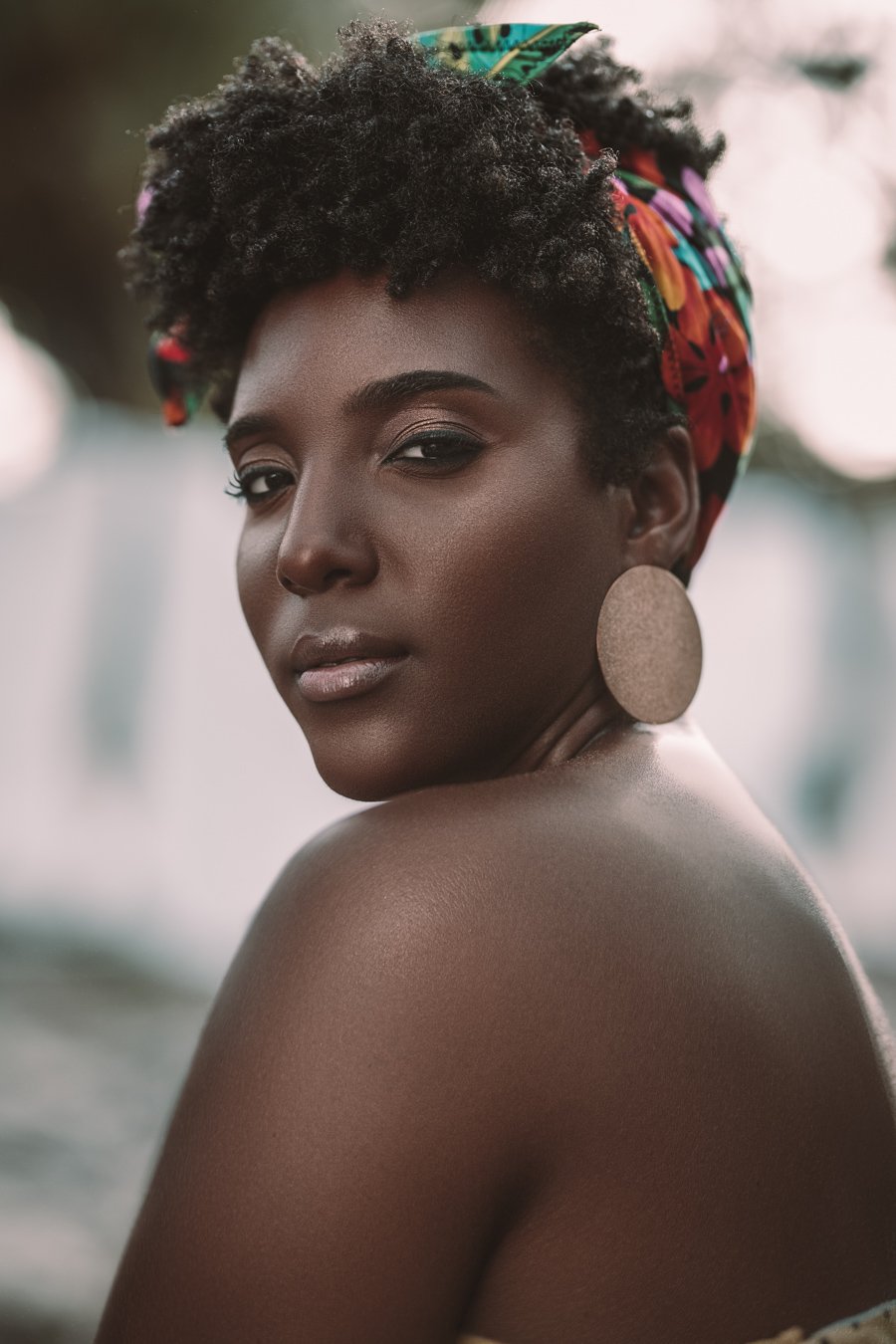
Francine Russell in “Olde Town Lady”
OLDE TOWNE LADY is a series that brings the stories of different generations of Bahamian women out of the shadows and analyzes how they collectively contributed to the culture and traditions that are common and upheld in our Bahamian society today. We aim to theorize and construct the historical knowledge of Bahamian Women through Oral Histories and Creative Interpretations.
These women existed in everyone’s family, but their narratives are often overlooked and under-valued. They carried out the underappreciated and undermined labor that was key to sustainable development and the well-being of the family and community. They also protected and transmitted the cultural and social heritage of The Bahamas, with hopes that their labor and stories were not in vain.
Francine is a Co-Principal of The Heritage Partners - a professional services agency specializing in Heritage branding, research, and management.
SHE’S ROYAL

However, to put on a more dignified or elegant appearance. slaves had to fend for themselves. A large part of the small sums of money earned through extra work or selling produce went in purchasing a pair of shoes and at least one set of decent clothing for dances, funerals, or church-going...for the women, a dress and petticoats of good East Indian cotton, a colourful handkerchief for head ties.
Islanders in the Stream: A History of the Bahamian People. Vol. 1, from Aboriginal Times to the End of Slavery. Athens, University Of Georgia Press, 1999.
CHURCH LEADER

Despite the predominance of men as priests and pastors, all churches provided opportunities for women to participate, enhance their respectability, and even lead. In the Anglican and Methodist churches alike, women outnumbered men as Sunday school teachers, and they were invaluable in organizing annual bazaars, fete, and other fund-raising functions.
Craton, Michael, and Gail Saunders. Islanders in the Stream: A History of the Bahamian People. University of Georgia Press, 1998.
BLACK WOMEN SUSTAIN COMMUNITIES

Far fewer women worked as plantation laborers, and most of the men became transients, living in barracks or strange villages during crop-time and being unable to form permanent or stable attachments while women provided the only permanence and stability for children.
Craton, Michael. “Changing Patterns of Slave Families in the British West Indies.” Journal of Interdisciplinary History, vol. 10, no. 1, 1979.
SHARING AND BARTERING

As in Africa, marketing played a large part in the lives of all black New Providence “villagers, and most of the vendors were women. Some sold vegetables and fruits from door to door, others from small stalls outside their yards, at the end of their lanes, or in Grant’s Town small formal market.
Craton, Michael, and Gail Saunders. Islanders in the Stream: A History of the Bahamian People. University of Georgia Press, 1998.
SUBSISTENCE FARMING

The slaves themselves (of whom three-quarters lived at Clifton) had twenty-two family allotments, totalling sixty acres, well planted in-ground provisions. Though much of the area on each farm was "white land" or swamp, and the slaves' provision grounds were not in the best locations, it was possible for a family to sustain itself through the labor of the women and children alone, and the more industrious families produced considerable surpluses for the market in Nassau. Islanders in the Stream: A History of the Bahamian People. Vol. 1, from Aboriginal Times to the End of Slavery. Athens, University Of Georgia Press, 1999.
FROM FIELDS TO FORTUNE

Similarly, the more fortunate and industrious slaves would boast a pitiful handful of extra possessions and marginal luxuries: scissors and dressmaking materials, some specialist tools, a glass or two, and some chinaware (some of it cracked or chipped and passed on from the master), a mirror, combs and trinkets, and a store of clay pipes (which were smoked by women and men alike when they could). Islanders in the Stream : A History of the Bahamian People. Vol. 1, from Aboriginal Times to the End of Slavery. Athens, University Of Georgia Press, 1999.
SEE THE FULL GALLERY


WATCH THE BTS VIDEO
SHOOT CREDITS
Model: Francine Russell
Photographer: Scharad Lightbourne
Stylist: Shan Oliver
Dress Designer: Theodore Sealy
MUA: Ruth Ash Rolle
Hair: Jamell Dawkins
Video: Tony Williams
Video Editor: Craig Walkine
BTS: Rayandra Nairn
Kid Model: Dane Marshall
Male Model: Ricardo Hepburn @DR3amMEdia
Contributors: Dru Hepburn / Maria Hall
Special Thanks
The National Art Gallery of The Bahamas
The Heritage Partners
UB Art Students

CHALLENGE Yourself! You can shoot anywhere!

Often, I'm asked, "How do you come up with your locations?"
My answer is always the same. I get in my car, drive around town and pull out my iPhone when I see a place or space that looks interesting. I am under the mindset that you can shoot anywhere and make it look great with a little improvisation and creativity. My goal for this post was to push and challenge any of my readers who find it hard to find exciting and different space to shoot their subjects.
My client, Le’Annka, wanted to do something different. She didn't wish to studio portraits. She wanted to be creative and diverse, and so she was adamant that we shoot outdoors. When she and I met for a consultation, I showed her my plans for a shoot to take place in tall blades of grass one would find in nature.
Now, living on a small island presents its issue with always having somewhere new to photograph. New Providence, the island that I live on, is only 21 miles long by 7 miles wide, and there are few public spaces one can gain access to. Some areas are overused repeatedly because of convenience, flexibility and can we say lackadaisicalness?
I knew I wanted to shoot Le’Annka in the "bush" on the side of the road, reminiscent of my earlier days of being a photographer. I had no studio, so I used the beaches, bushes and nature as my set. I thought to use a stunning hand-painted canvas backdrop I'd ordered from Portrait Drops on location, sort of a makeshift studio, and I knew I’d mix ambient lighting with my strobe.

Le’Annka was a great subject to photograph. She was easy to direct and her innocence complimented the images that I tried to capture. The natural and ambient light, grass and overall styling created this ambience that I only could find on Pinterest. Still, here I was, capturing these beautiful images in a location that many of us would simply drive past.
Check the images and my first YOUTUBE video for the year. I knew this topic would be relatable to many photographers as its something I'm challenged with. Let me know what you think in the comments, and I'd love to find out other topics you find interest in.
SEE THE GALLERY


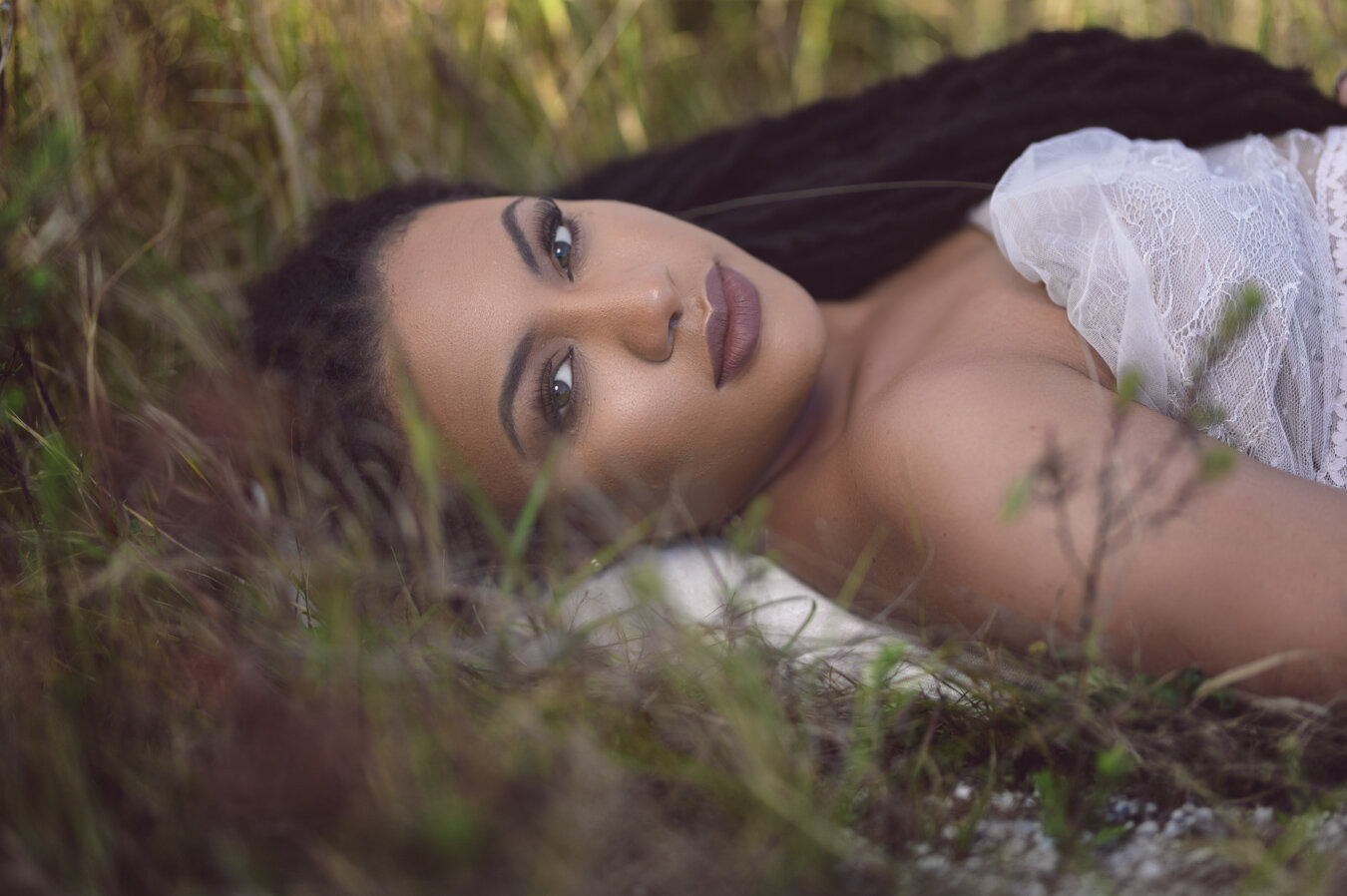

Leannka Rigby 📸 by Scharad Lightbourne
Makeup by @ravensimone_mua
Florals: @kvrh1984
Styling: @hannahnsimone⠀⠀
Grip: @tpetithomme
Dress: @rackconsignmentboutique
Backdrop: @portraitdrops
Video: @truevisionFSC